

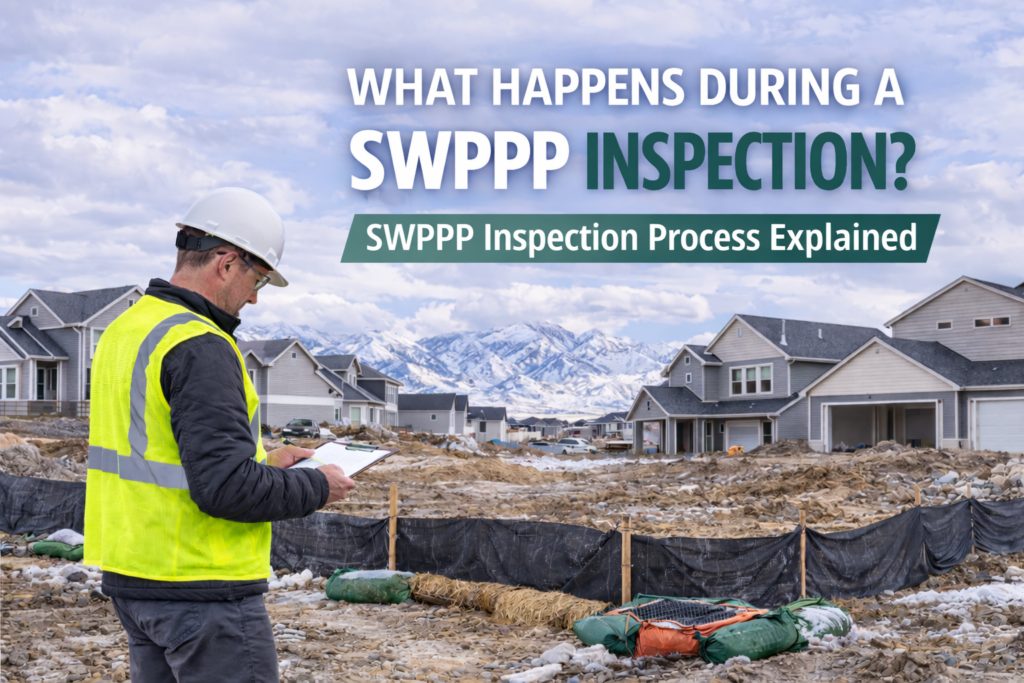

If you are managing a construction project, one of the most common questions contractors ask is what happens during a SWPPP inspection. Many developers understand that inspections are required, but fewer know exactly what inspectors are looking for once they arrive on site.
Understanding what happens during a SWPPP inspection helps contractors prepare their sites, maintain stormwater compliance, and avoid costly violations. In Utah, stormwater inspections are performed regularly throughout construction to ensure that erosion control measures and pollution prevention practices are working correctly.
In this guide, we will walk through the SWPPP inspection process in Utah, explain what inspectors evaluate, and outline how contractors can stay compliant.
Why SWPPP Inspections Are Important
Stormwater inspections exist for one reason: to prevent construction runoff from polluting local waterways.
When soil, debris, and construction materials leave a site during rain or snowmelt, they can enter storm drains that lead directly to rivers, lakes, and reservoirs. Utah waterways such as the Jordan River, Utah Lake, and the Great Salt Lake watershed are especially sensitive to sediment pollution.
Regular SWPPP inspections ensure that erosion controls are installed correctly and functioning properly.
Who Performs SWPPP Inspections
SWPPP inspections may be performed by several parties depending on the project.
Common inspectors include:
- Qualified stormwater inspectors hired by contractors
- Environmental consultants
- Municipal inspectors
- Utah Department of Environmental Quality representatives
Regardless of who performs the inspection, the process follows the same general structure.
Step-by-Step: What Happens During a SWPPP Inspection
Step 1: Site Walkthrough
The inspection typically begins with a walkthrough of the entire construction site.
Inspectors review:
- Disturbed soil areas
- Drainage pathways
- Locations of storm drains
- Areas where runoff could leave the site
The goal is to identify potential stormwater risks before they cause environmental problems.
Step 2: Checking Erosion Control Measures
Next, inspectors evaluate Best Management Practices (BMPs) designed to control erosion and sediment.
Common BMPs inspected include:
- Silt fences
- Straw wattles
- Check dams
- Sediment basins
- Erosion control blankets
Inspectors check that these controls are installed properly and have not been damaged by weather or equipment.
Step 3: Inspecting Storm Drain Protection
Storm drains are one of the most critical points of inspection.
Inspectors verify that:
- Inlet protection devices are installed
- Sediment has not accumulated excessively
- Drainage paths are properly controlled
Storm drains without protection can allow sediment to flow directly into public waterways.
Step 4: Reviewing Material Storage and Pollution Controls
Stormwater inspections also evaluate potential sources of pollution.
Inspectors review areas where materials such as fuel, chemicals, or concrete are stored.
They verify that:
- Containers are properly covered
- Spill prevention measures are in place
- Concrete washout areas are contained
These steps help prevent contaminants from entering runoff.
Step 5: Reviewing Construction Entrances and Roads
Sediment tracking from construction vehicles is another common issue.
Inspectors evaluate:
- Stabilized construction entrances
- Gravel pads
- Adjacent roadways
If soil is being tracked onto nearby roads, additional street sweeping or stabilization may be required.
Step 6: Documentation and Reporting
The final part of the inspection involves documenting findings.
Inspection reports typically include:
- Date and time of inspection
- Weather conditions
- Condition of BMPs
- Areas needing corrective action
- Timeline for repairs
These records become part of the project’s official SWPPP documentation.
Common Issues SWPPP Inspectors Find
During SWPPP inspections, inspectors frequently identify problems such as:
- Damaged or collapsed silt fencing
- Sediment buildup around storm drains
- Poorly maintained sediment basins
- Missing inspection documentation
- Evidence of runoff leaving the site
Addressing these issues quickly helps avoid enforcement actions.
How Contractors Can Prepare for a SWPPP Inspection
Preparing for inspections does not require complicated steps.
Contractors can stay inspection-ready by:
- Maintaining erosion control BMPs regularly
- Documenting inspections consistently
- Cleaning sediment from storm drains
- Stabilizing exposed soil
- Monitoring runoff pathways
Many contractors also work with professional stormwater compliance services to ensure inspections are handled correctly.
Local Considerations for Utah Construction Sites
Stormwater inspections in Utah often focus on conditions unique to the region.
Salt Lake County construction sites often face issues related to urban storm drain networks and high traffic volumes.
Utah County sites must also consider sediment transport toward Utah Lake, especially during spring runoff.
Weather conditions such as snowmelt and freeze-thaw cycles also increase runoff risk during winter months.
How Lavanta Helps Contractors Prepare for SWPPP Inspections
Lavanta works with contractors across Salt Lake County, Utah County, and surrounding areas to ensure construction sites remain compliant.
Our services include:
- SWPPP inspections
- BMP installation and maintenance
- Stormwater documentation
- Compliance support during inspections
Our team helps contractors identify potential issues before inspectors arrive.
Ready to start your project?
If your project requires stormwater inspections, having experienced compliance support makes the process easier.
Lavanta provides professional SWPPP inspections and stormwater compliance services throughout Utah.
Contact Lavanta today to schedule inspection support and keep your construction project fully compliant.