

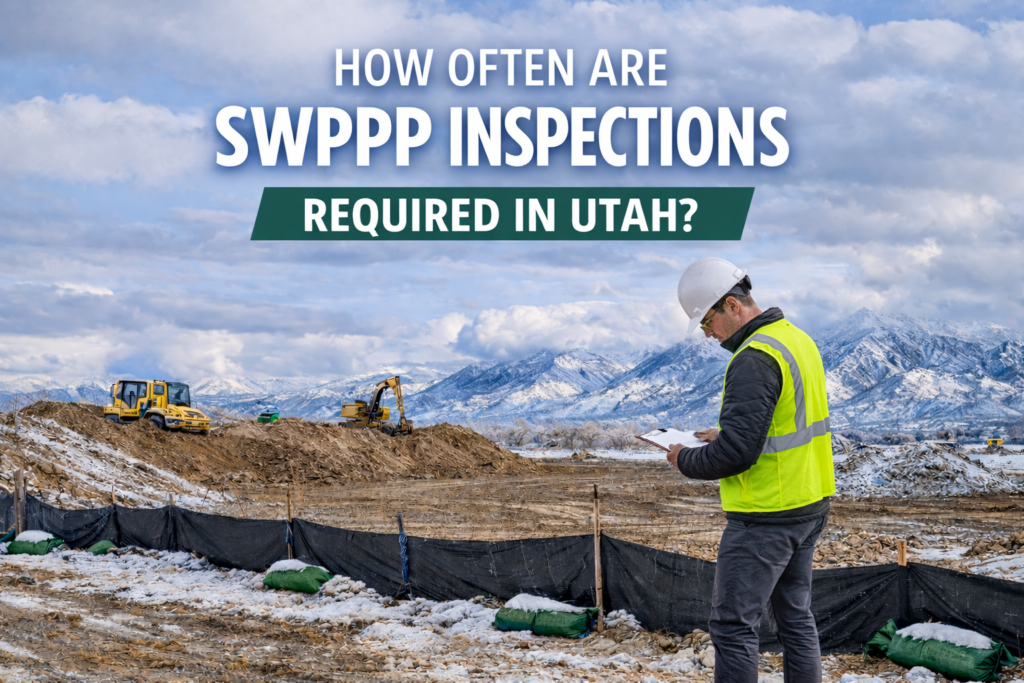

One of the most common questions contractors ask when managing stormwater compliance is simple:
How often do SWPPP inspections need to happen in Utah?
The answer matters because inspections are one of the most heavily enforced parts of stormwater compliance. Even when erosion controls are installed correctly, missing inspections or incomplete documentation can lead to violations.
Understanding the inspection schedule, documentation requirements, and responsibilities helps contractors avoid fines and keep projects moving forward.
What Is a SWPPP Inspection?
A SWPPP inspection is a routine evaluation of a construction site’s stormwater controls. Inspectors review the condition and performance of BMPs, verify that erosion controls are working properly, and confirm that the site remains compliant with the Utah Construction General Permit.
During an inspection, the inspector checks:
- Erosion control measures such as silt fencing and wattles
- Sediment basins and inlet protection
- Stabilized construction entrances
- Material storage and pollution prevention areas
- Evidence of runoff leaving the site
The goal is to identify potential stormwater issues before they become environmental violations.
How Often SWPPP Inspections Are Required in Utah
Under the Utah Construction General Permit, most sites must be inspected:
At least every 14 days
Routine inspections must occur at least once every two weeks while construction activity is ongoing.
Within 24 hours after major storm events
If rainfall produces 0.5 inches or more of precipitation, the site must be inspected within 24 hours after the storm ends.
After snowmelt events that cause runoff
Utah’s winter conditions make snowmelt a significant runoff risk, which can also trigger inspection requirements.
These inspection requirements apply throughout the entire construction process.
What Must Be Documented During an Inspection?
Every SWPPP inspection must include detailed records. These documents serve as proof of compliance if regulators review your site.
Inspection reports typically include:
- Date and time of inspection
- Name and credentials of the inspector
- Weather conditions
- Condition of BMPs
- Evidence of erosion or sediment runoff
- Corrective actions required
- Timeline for repairs
Documentation should be stored with the project’s SWPPP records and available on-site.
What Happens If an Inspection Is Missed?
Missing required inspections is one of the fastest ways to receive a stormwater violation.
Possible consequences include:
- Written warnings from inspectors
- Corrective action orders
- Monetary penalties
- Increased inspection frequency
Even well-managed sites can face violations if inspection records are incomplete.
Who Can Perform SWPPP Inspections?
SWPPP inspections must be conducted by a qualified inspector familiar with stormwater regulations and BMP maintenance.
This may include:
- Trained contractors
- Environmental consultants
- Stormwater compliance specialists
Many developers choose professional inspection services to ensure compliance and maintain accurate documentation.
Why Professional Inspections Help Contractors Stay Compliant
Managing inspections internally can be challenging, especially on large or multi-phase projects.
Professional SWPPP inspection services provide:
- Consistent inspection schedules
- Detailed documentation and reporting
- Immediate identification of BMP failures
- Corrective action recommendations
Lavanta provides inspection services throughout Salt Lake County, Utah County, and the Wasatch Front, helping contractors stay compliant throughout every phase of construction.
Local Stormwater Inspection Considerations in Utah
Stormwater inspections in Utah are influenced by local geography and climate.
Salt Lake County sites often face:
- High traffic areas where sediment tracking occurs
- Urban storm drain networks requiring strict inlet protection
Utah County projects frequently deal with:
- Sloped terrain and rapid snowmelt runoff
- Sediment transport toward Utah Lake
Understanding these local conditions helps inspectors identify problems early.
Ready to schedule your SWPPP Inspection?
If your construction project requires regular SWPPP inspections, working with a local compliance expert makes the process easier.
Lavanta provides professional SWPPP inspections, documentation, and stormwater compliance services across Utah.
Contact Lavanta today to schedule inspection services and keep your project fully compliant.