

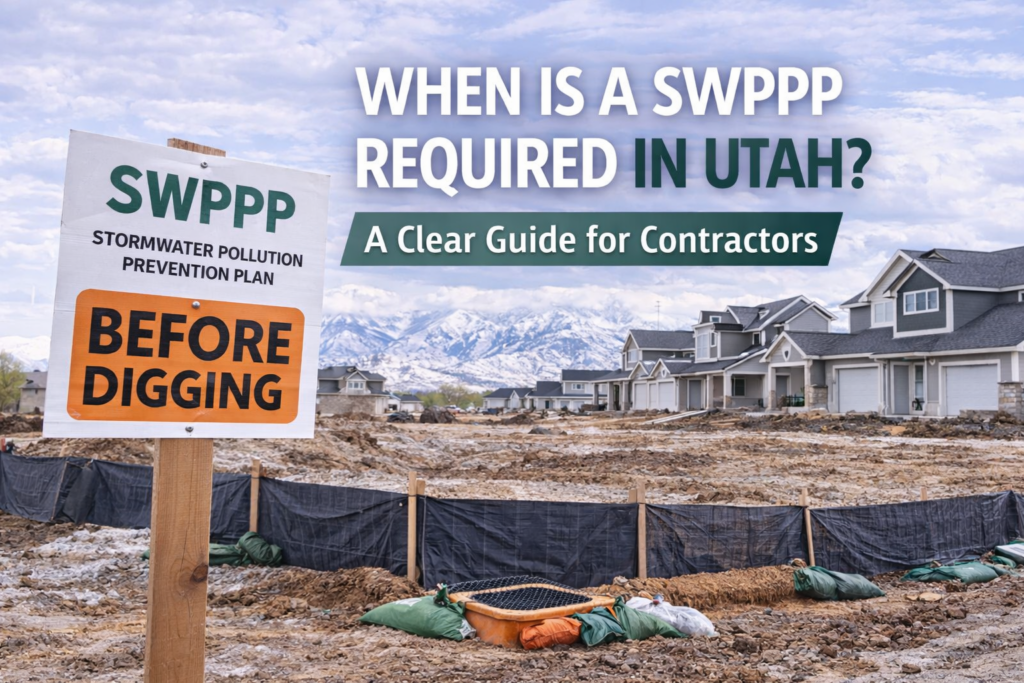

If you are planning a construction project, one of the first questions you should ask is:
When is a SWPPP required in Utah?
This question comes up constantly for contractors, developers, and even homeowners building new homes. The answer is not complicated, but it is critical to understand before any ground is disturbed.
In Utah, SWPPP requirements apply earlier than most people expect, and missing that timing is one of the most common reasons projects run into compliance issues.
This guide breaks down exactly when a SWPPP is required in Utah, what triggers it, and how to make sure your project starts compliant.
The Short Answer
A SWPPP is required in Utah if:
- Your project disturbs 1 acre or more of land, or
- Your project is part of a larger common plan of development, even if your portion is less than 1 acre
If either of these applies, you must have a SWPPP before construction begins.
What Counts as Land Disturbance?
Many contractors assume SWPPP requirements only apply to large-scale excavation, but that is not the case.
Land disturbance includes:
- Grading
- Trenching
- Excavation
- Clearing vegetation
- Utility installation
- Roadwork
Even early site prep work can trigger SWPPP requirements.
If soil is being disturbed, stormwater compliance should already be in place.
What Is a Common Plan of Development?
This is where many projects get caught off guard.
A common plan of development refers to any larger project that is divided into multiple lots or phases.
Examples include:
- Residential subdivisions
- Multi-lot housing developments
- Commercial complexes
- Phased construction projects
Even if your individual lot is small, you are still required to follow SWPPP regulations if it is part of a larger development.
Do Residential Projects Need a SWPPP in Utah?
This is one of the most common follow-up questions.
You typically need a SWPPP if:
- You are building within a subdivision
- The total development exceeds 1 acre
- The site is part of a phased build
You may not need one if:
- You are building a single home on a fully stabilized lot
- The project is under 1 acre and not part of a larger plan
That said, many residential builders are still required to follow SWPPP guidelines depending on local jurisdiction and site conditions.
When Must the SWPPP Be Completed?
A SWPPP must be:
- Completed before any ground disturbance occurs
- Kept on-site and accessible at all times
- Updated as the project progresses
This is one of the most important points to understand.
You cannot start construction and then create a SWPPP later. It must be in place from the beginning.
What Happens If You Do Not Have a SWPPP?
Starting a project without a required SWPPP can lead to:
- Compliance violations
- Stop-work orders
- Fines from Utah DEQ
- Project delays
This is one of the most preventable issues in construction, yet it happens frequently.
Why SWPPP Requirements Are Strict in Utah
Utah’s environment plays a big role in enforcement.
Construction runoff can quickly enter waterways such as:
- Utah Lake
- The Jordan River
- The Great Salt Lake watershed
Because storm drains often flow directly into these systems, controlling sediment and pollutants is a top priority.
That is why SWPPP compliance is taken seriously across the state.
How to Know for Sure If Your Project Needs a SWPPP
If you are unsure whether your project requires a SWPPP, ask:
- How much land will be disturbed?
- Is this part of a larger development?
- Will runoff leave the site during rain or snowmelt?
If there is any uncertainty, it is always better to confirm before starting work.
How Lavanta Helps Contractors Stay Compliant
Lavanta works with contractors across Salt Lake County, Utah County, and surrounding areas to determine SWPPP requirements and manage compliance.
We help with:
- Determining if a SWPPP is required
- Preparing SWPPP documents
- Installing BMPs
- Performing inspections
- Maintaining compliance throughout construction
Being based in Bluffdale, Lavanta provides fast, local support for projects across northern Utah.
If you are planning a construction project and are unsure when a SWPPP is required in Utah, it is better to confirm early than deal with issues later.
Lavanta provides professional SWPPP planning and stormwater compliance services to help your project start the right way.
Contact Lavanta today to determine your SWPPP requirements and stay compliant from day one.