

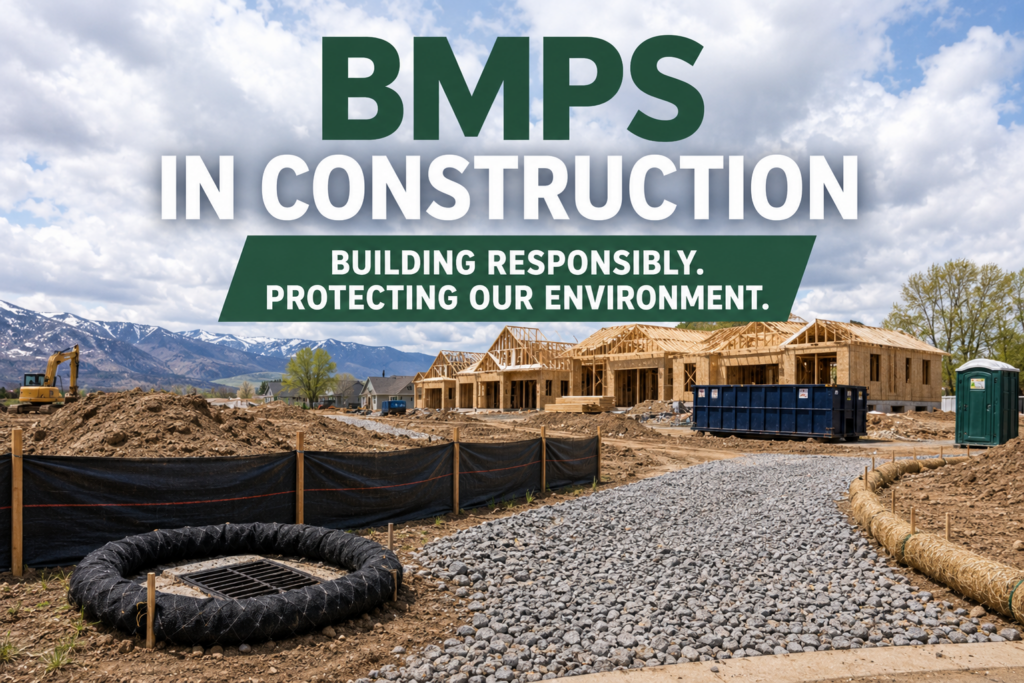

If you’ve worked on a construction project in Utah, you’ve probably heard the term BMPs. It appears in SWPPP plans, inspection reports, permit documents, and stormwater compliance discussions.
But many contractors still ask the same question:
What are BMPs in construction, and why are they so important?
BMP stands for Best Management Practice. In construction, BMPs are the physical controls, procedures, and strategies used to prevent sediment, pollutants, and construction debris from leaving a jobsite and entering nearby waterways.
Whether you’re building a subdivision in Saratoga Springs, developing a commercial site in Salt Lake City, or grading land in Bluffdale, BMPs play a critical role in keeping your project compliant with stormwater regulations.
What Does BMP Mean in Construction?
A BMP, or Best Management Practice, is any measure used to reduce the environmental impact of construction activities.
The primary goal of construction BMPs is to:
- Prevent erosion
- Control sediment runoff
- Protect storm drains
- Reduce pollution
- Maintain SWPPP compliance
Think of BMPs as the tools and systems that help keep soil where it belongs while protecting nearby rivers, lakes, and drainage systems.
Why Are BMPs Required on Construction Sites?
Construction sites create large areas of exposed soil.
Without proper controls, rain, snowmelt, and runoff can carry that sediment off-site and into stormwater systems.
This can lead to:
- Water pollution
- Regulatory violations
- Failed inspections
- Costly corrective actions
Utah DEQ and EPA stormwater regulations require contractors to implement BMPs to prevent these issues.
Common BMPs Used on Utah Construction Sites
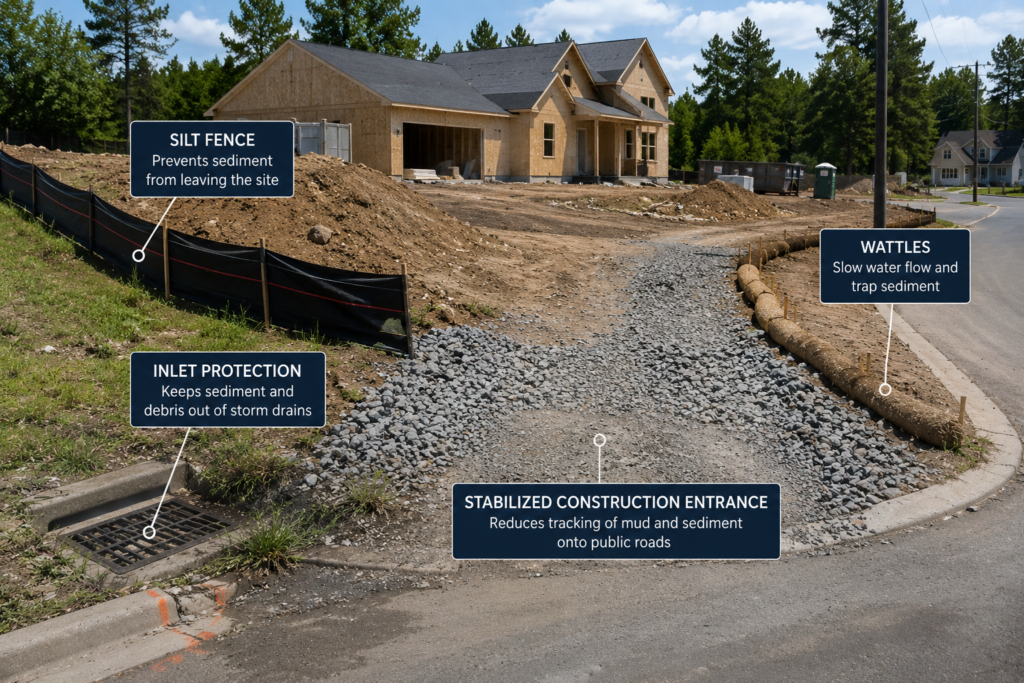
Silt Fence
Silt fence is one of the most recognizable BMPs used in construction.
It consists of a geotextile fabric barrier installed along the perimeter of disturbed areas.
Its purpose is to:
- Slow runoff
- Capture sediment
- Prevent soil from leaving the site
Silt fences are commonly used on residential developments throughout Salt Lake County and Utah County.
Straw Wattles
Straw wattles are long tubes filled with straw or wood fiber.
They help:
- Slow water flow
- Reduce erosion
- Trap sediment
These BMPs are especially effective on slopes and around drainage pathways.
Inlet Protection
Storm drain inlet protection prevents sediment from entering municipal drainage systems.
This BMP is critical because storm drains often discharge directly into local waterways.
Stabilized Construction Entrances
Construction entrances help reduce sediment tracking onto public roads.
Typically built using crushed rock, they help remove mud and debris from vehicle tires before leaving the site.
Sediment Basins
Sediment basins collect runoff and allow sediment to settle before water leaves the site.
These are commonly used on larger construction projects and phased developments.
Hydroseeding and Vegetative Stabilization
Hydroseeding is often used to stabilize disturbed soil and establish vegetation quickly.
Once vegetation becomes established, erosion risk decreases dramatically.
Structural vs Non-Structural BMPs
BMPs generally fall into two categories.
Structural BMPs
These are physical devices installed on-site.
Examples include:
- Silt fence
- Inlet protection
- Sediment basins
- Check dams
Non-Structural BMPs
These involve processes and procedures.
Examples include:
- Site inspections
- Employee training
- Material storage controls
- Street sweeping schedules
Most SWPPP plans use a combination of both.
How BMPs Support SWPPP Compliance
Every SWPPP relies on BMPs to function effectively.
BMPs help contractors:
- Meet permit requirements
- Pass inspections
- Reduce runoff
- Protect nearby waterways
- Avoid fines and violations
Without BMPs, a SWPPP is simply paperwork.
BMPs are what turn the plan into action.
Common BMP Mistakes Contractors Make
One of the biggest misconceptions is that installing BMPs once is enough.
BMPs require regular maintenance and inspection.
Common issues include:
- Damaged silt fence
- Sediment-filled inlet protection
- Collapsed wattles
- Overflowing sediment basins
- Missing documentation
These problems often lead to compliance issues during inspections.
BMPs and Utah’s Unique Climate
Utah presents several challenges that make BMP maintenance especially important.
Contractors must account for:
- Intense summer thunderstorms
- Spring snowmelt
- Freeze-thaw cycles
- High winds
- Dry, easily erodible soils
BMPs should be selected and maintained based on site-specific conditions.
Why Contractors Partner with Lavanta for BMP Installation and Maintenance
Installing BMPs correctly is just as important as having them on-site.
Lavanta helps contractors across Utah with:
- BMP installation
- BMP maintenance
- SWPPP compliance
- Stormwater inspections
- Erosion control services
Our team understands Utah’s climate, regulations, and construction challenges, helping projects stay compliant from start to finish. BMPs are the foundation of stormwater compliance on any construction site. If your project requires BMP installation, maintenance, inspections, or SWPPP support, Lavanta can help.
Contact Lavanta today to keep your project compliant and protected.
Questions we get asked about BMP installs
What are BMPs in construction?
BMPs, or Best Management Practices, are measures used to control erosion, sediment, and pollution on construction sites.
Why are BMPs required?
BMPs help prevent runoff pollution and are required under SWPPP and stormwater regulations.
What is the most common BMP used in construction?
Silt fence is one of the most commonly used BMPs on construction sites.
Do BMPs need maintenance?
Yes. BMPs must be inspected and maintained regularly to remain effective.
Does Lavanta install BMPs in Utah?
Yes. Lavanta provides BMP installation, maintenance, inspections, and stormwater compliance services throughout Utah.